

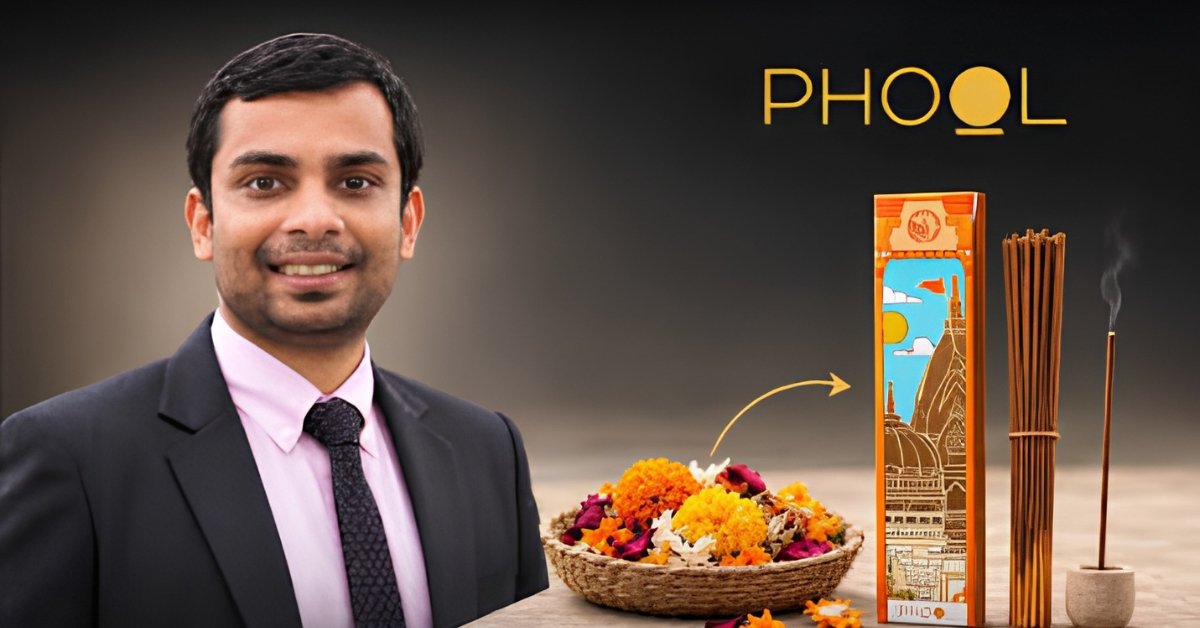
Ankit Agarwal Success Story: Thousands of flowers are offered to the temples in India daily. Many of these flowers are thrown away after being offered to the gods, including into rivers and other water bodies. For most people, this was just a normal religious expenditure, but for Ankit Agarwal, it was something else. He noticed an environmental issue that now had the potential to be a business opportunity.
His concept eventually gave birth to a Kanpur-based start-up, Phool, which converts waste temple flowers into ‘effective and environmentally friendly’ products. Initially started as a way to help lower river pollution, it slowly transformed into a new business that incorporated sustainability, technology, and social responsibility. Ankit’s story is an interesting one of how a businessman can recognise a normal problem and create an enterprise to solve it.
Who is Ankit Agarwal?
Ankit Agarwal is an Indian entrepreneur and founder and CEO of a company called Phool, which is an innovator in flower recycling technology. Born and nurtured in Kanpur, UP, he was early caught by the charm of technology and innovation.
He has a Bachelor’s degree in Computer Engineering from Pune Institute of Computer Technology (PICT) and also has a Master’s degree in Innovation Management from Symbiosis Institute of Business Management (SIBM), Pune.
Prior to becoming an entrepreneur, Ankit was working for Symantec Corporation as an Automation Scientist. He gained experience in technology and research that helped him to think analytically about how to solve a problem. Eventually, however, his enthusiasm for environmental sustainability made him think about doing more than just a regular job in a company.
The Incident That Inspired the Idea Behind Phool
It all started with a small observation at Makar Sankranti in 2015. Ankit was with a friend from the Czech Republic, visiting the banks of the River Ganga in Kanpur. They saw humans bathing in the river and they saw the activities going on at the ghats, but they saw that people were taking holy dips in the river, which was polluted.
As they talked, Ankit’s friend asked him why such an important river was so polluted. This discussion made Ankit think about how to possibly help solve the problem. As he was gazing at the river, he saw a lot of thrown away flowers. These flowers were once offered to the deities in the temple.
At that time, his mind was changed. He started wondering why the flowers were not being utilised and if they could be gathered and used for something good. The goal was quite straightforward yet ambitious: to keep temple flowers out of rivers and find a useful purpose for them.
Ankit Agarwal Success Story: How Ankit Agarwal Started Phool
It wasn’t smooth sailing when it came to making an idea a viable enterprise. Ankit started working on finding ways to recycle the discarded flowers and how that could be done and converted to useful products.
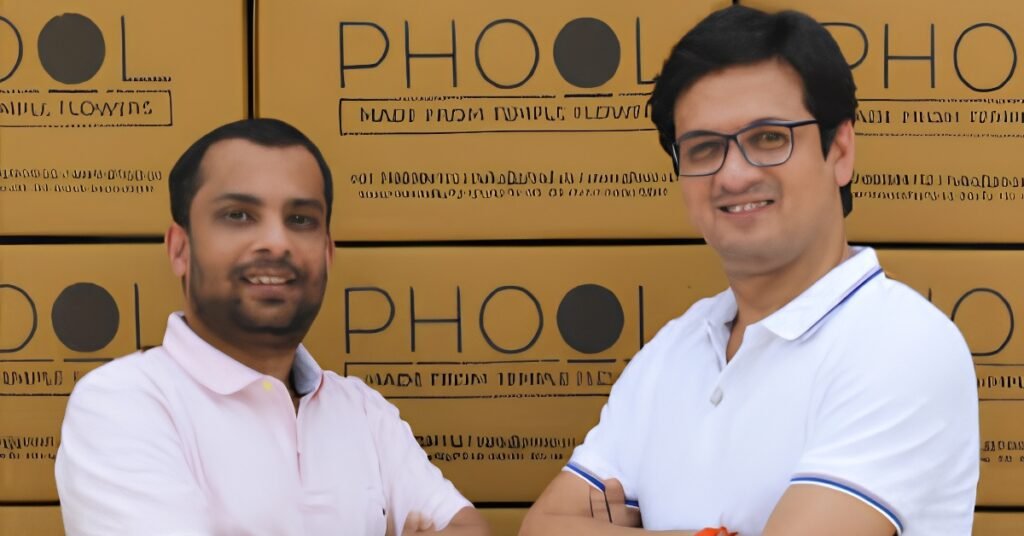
At first, some options were considered, such as composting. Technical challenges arose in the process, however, with the presence of substances, like turmeric and vermilion, in the flowers used for the temples. Instead, they persisted with their exploration of new approaches. Eventually, they found a way to make flowers a resource for making incense sticks and cones from discarded flowers. Ankit teamed up with Prateek Kumar to further expand the business. In 2017, they formed Kanpur Flowercycling Private Limited, the holding company for Phool.
The startup launched a Flower Recycling Model where it collected discarded flowers from religious places and converted them into commercial products. This was an effective way to reuse the waste of the temples, as well as provide an alternative to traditional incense production.
What Does Phool Do With Discarded Flowers?
Phool gathers, sorts, dries and processes flowers that are otherwise thrown away. The company first gained fame as the maker of incense sticks and cones from recycled temple flowers. These products provided an alternative to traditional fragrance products to their customers.
Eventually, its innovation went beyond incense.
It has also witnessed some significant product innovations such as:
- Incense sticks and cones: Recycled temple flowers used to make products.
- Phool Mitti: Organic vermicompost prepared from floral waste.
- Fleather: A new biodegradable, animal-free material made from flower waste.
- Recycled flowers: Study of recycling flowers for other purposes.
- Sustainable materials: These products are based on the principle of resource utilisation instead of waste.
Creating Employment Opportunities for Women
The social impact is one of the most valuable parts of Phool’s business model. The company has been working towards creating job opportunities for the women of the weaker sections of society, such as women from households traditionally involved in manual scavenging.
These ladies are engaged in various phases of the flower recycling and manufacturing process. A lot of them are going to get more respectable jobs and a steady income from this opportunity.
This is what sets Phool apart from businesses that simply offer products which are eco-friendly. It also takes into account the human element in the production process in its model. In linking the protection of the environment with employment creation, Ankit has proved that a startup can achieve social goals beyond one.
Challenges Faced During the Entrepreneurial Journey
Developing a recycling technology was not enough to build Phool. Ankit also faced various practical and operational challenges. A big challenge was educating religious institutions not to throw away flowers in rivers. The practice was linked to religious beliefs, and it took time and sensitivity to make changes to the current system.
The company had to put in place a stable collection system to get fresh floral waste from various temples. The other difficulty was to make a product that is commercially viable from the non-marketable material. The team needed to do some research, product development, and manufacturing.
It was also essential to convince customers to buy goods that were produced with recycled flowers. The environmental message was not all that Phool could focus on, though, since its products also had to provide quality, fragrance, and a good customer experience.
Recognition and Growth of Phool
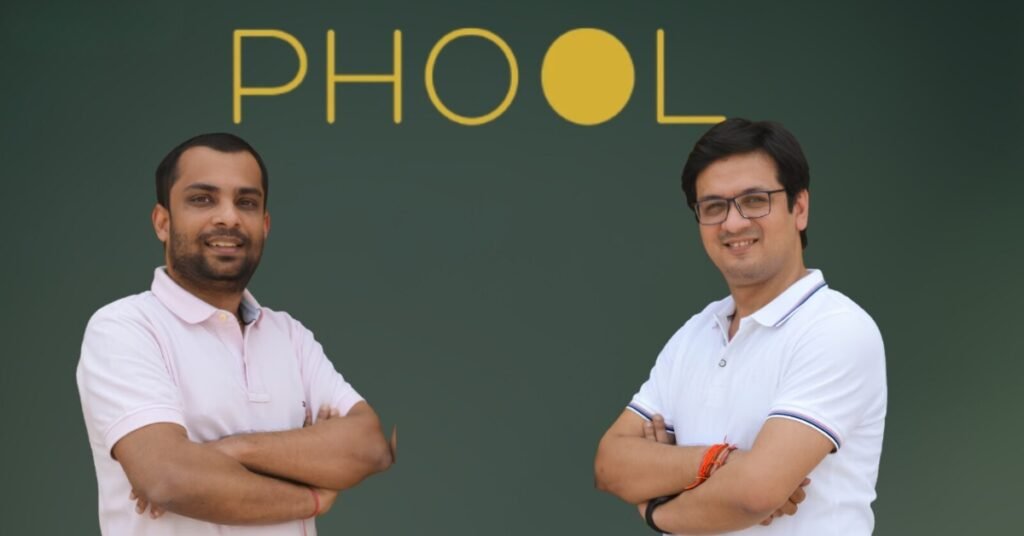
Phool’s innovative approach caught the eye of organisations in sustainability, entrepreneurship and social development. The company has been acknowledged for its initiative to tackle floral waste and provide job opportunities.
Ankit Agarwal has become a hero for entrepreneurs. Ankit Agarwal has made himself a hero for entrepreneurs. There are some lessons to be learned from ankit agarwal’s story for a budding businessman.
One: Business opportunities don’t always exist in expensive technologies or in new markets. Occasionally, they are problems people have long grown accustomed to ignoring.
Secondly, when creating an unconventional business concept, it is crucial for research and experimentation. Phool was not built in a day. The founders had to experiment with various strategies in order to arrive at a viable solution.
Frequently Asked Questions (FAQs)
Who is Ankit Agarwal?
Ankit Agarwal is an Indian entrepreneur and the founder and CEO of a start-up, “Phool”, that transforms the flowers that are donated to the temple into eco-friendly products.
What is Phool?
Phool is an Indian-based sustainable business that collects discarded flowers from religious institutions and converts them into incense sticks, incense cones, organic compost and innovative biomaterials.
In what year was Phool established?
Ankit Agarwal and Prateek Kumar set up their parent company, Kanpur Flowercycling Private Limited, in 2017.
What made Ankit Agarwal think of the idea of starting Phool?
In 2015, when Ankit visited the banks of the River Ganga in Kanpur, he observed the temple flowers that were being thrown into the river in huge numbers. On a visit to the River Ganga in Kanpur in 2015, Ankit noticed a significant amount of discarded flowers being thrown into the river from the temples. This observation inspired the idea to explore the possibilities of recycling the flower waste.
What is the name of the plant from which Fleather is made?
Fleather is an animal-free, leather-like material created from discarded flowers. It is a reflection of the work of Phool in finding alternative materials for sustainability.